
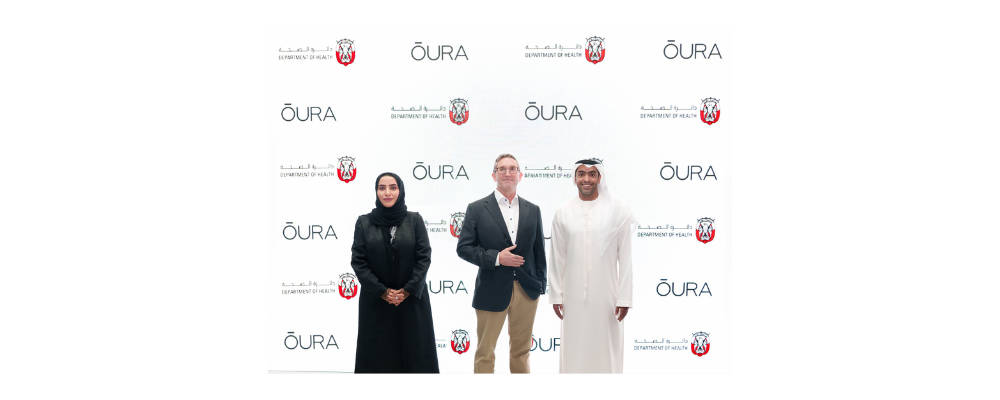
Department of Health – Abu Dhabi (DoH) and ŌURA, a leading health intelligence platform and maker of the world’s smallest smart ring, today announced Project CRADLE (Capturing Risk And Detecting Labor signals in Elevated-risk pregnancies), a 24-month pilot study to research how biometric data from wearable technology can reveal early warning signs of spontaneous premature birth.
Announced by H.E. Dr. Noura Khamis Al Ghaithi, Undersecretary of the Department of Health – Abu Dhabi and ŌURA CEO Tom Hale at the Abu Dhabi Future Health Summit, Project CRADLE is the first live research initiative in the long-term partnership between DoH and ŌURA, previously announced in May 2026, to study how continuous wearable data can advance preventative health.
Premature, or preterm, birth is when a baby is born before 37 completed weeks of pregnancy, and can occur spontaneously or following medical intervention. It affects roughly 1 in 10 births worldwide, accounting for millions of births every year, and remains one of the most unpredictable complications in pregnancy. Today, clinicians largely rely on symptoms and medical history, but identifying risks earlier in pregnancy could allow care teams to intervene sooner, ensure families are within reach of the right care, and help protect the health of mothers and babies.
Project CRADLE will combine continuous wearable data from Oura Ring with Abu Dhabi’s clinical and genomic data to better understand risk factors around preterm birth. Underpinned by robust data governance, clear ethics approvals and rigorous clinical oversight, this jointly designed study aims to set a structured path from research to real-world application within healthcare systems, including broader integration within Abu Dhabi’s health system, subject to evidence and regulatory approval. The initial healthcare institutions to participate in the pilot will be Corniche Hospital and Mediclinic Airport Road, two of the leading maternal care institutions in Abu Dhabi.
“In Abu Dhabi, we are building an intelligent health system of the future,” said H.E. Dr. Noura Khamis Al Ghaithi, Undersecretary of the Department of Health – Abu Dhabi. “Continuous sensing enables a shift from reactive care to healthcare that anticipates risk, detects warning signs sooner, and enables faster, more precise and personalised intervention. Project CRADLE brings this approach to pregnancy and birth, one of the most pivotal moments in life, building the evidence to guide more timely care.”
She continued, “Women’s health and fertility are at the heart of Abu Dhabi’s health priorities. Our ambition is to become a leading center for reproductive health that is grounded in research that advances care. In the UAE’s Year of the Family, we’re proud that research carried out in Abu Dhabi could improve lives for mothers, babies, and families here and around the world.”
“For more than a decade, ŌURA has pioneered the science of what continuous physiological data can reveal about a person’s health,” said Tom Hale, CEO of ŌURA. “Project CRADLE shows what could be possible when a forward-thinking health system combines clinical excellence with accurate, continuous monitoring. We’re proud to work alongside a health authority setting that standard, improving outcomes for families in the Emirate, and creating pathways that can be used across the world to improve health.”
Five months after signing their Memorandum of Understanding (MoU), DoH and ŌURA have moved from vision to active research, delivering on their commitment to pilot design, ethics approval, and local evidence generation. Project CRADLE is the first of three pilots focused on preventative health research, with a primary focus on women’s health and cardiometabolic health. It is part of Abu Dhabi’s prevention-led, data-driven health agenda which brings together Abu Dhabi’s intelligent health system, population-scale health and genomics data, integrated health infrastructure, and policy to accelerate population health research, where new models of care can be safely designed, validated, and scaled.

