
SEHA, a subsidiary of PureHealth and the largest healthcare group in the Middle East, has successfully managed a rare and potentially life-threatening neurological condition at SEHA’s Sheikh Tahnoun Bin Mohammed Medical City (STMC), demonstrating its advanced capabilities in diagnosing and treating complex brain disorders.
A 38-year-old male had arrived to SEHA STMC’s emergency department after experiencing dizziness, loss of consciousness, and severe pain in his right upper limb. The patient had episodes during sleep involving limb stiffening and frothy secretions from the mouth, each lasting at least two minutes and followed by agitation and disorientation.
Upon admission, the patient underwent specialised brain monitoring and testing, which indicated temporal lobe epilepsy likely secondary to autoimmune limbic encephalitis—a rare form of brain inflammation. The exact cause of the encephalitis remains uncertain. The patient’s medical history includes well-managed diabetes and high blood pressure.
Dr. Ahmed Samir Farw, Neurologist at SEHA’s Sheikh Tahnoun Bin Mohammed Medical City, said: “This case represents an extraordinary success of early recognition, multidisciplinary teamwork, and treatment. Potentially disabling neurological conditions were identified and managed promptly, enabling the patient to regain full functional stability and quality of life. The rapid recognition and collaborative approach of our care team ultimately saved the patient’s life.”
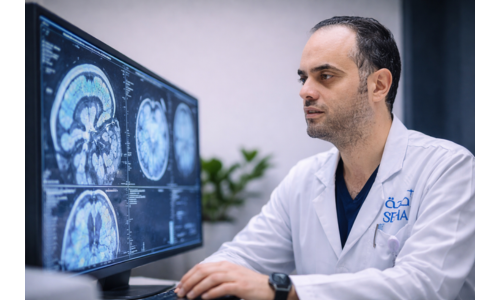
MRI imaging revealed symmetric cortical thickening and T2/FLAIR hyperintensity in the mesial temporal lobes and limbic system, consistent with limbic encephalitis. Additional MRI findings included isolated, non-specific demyelination in the frontal and anterior temporal subcortical white matter, without diffusion restriction or post-contrast enhancement.
The patient is now medically stable after receiving anti-seizure medications and immunoglobulins, with no further seizures observed. Ongoing testing continues to clarify the inflammatory process. This outcome reflects SEHA’s STMC’s clinical excellence and its commitment to providing rapid, cutting-edge neurological care through a coordinated, multidisciplinary approach.

